
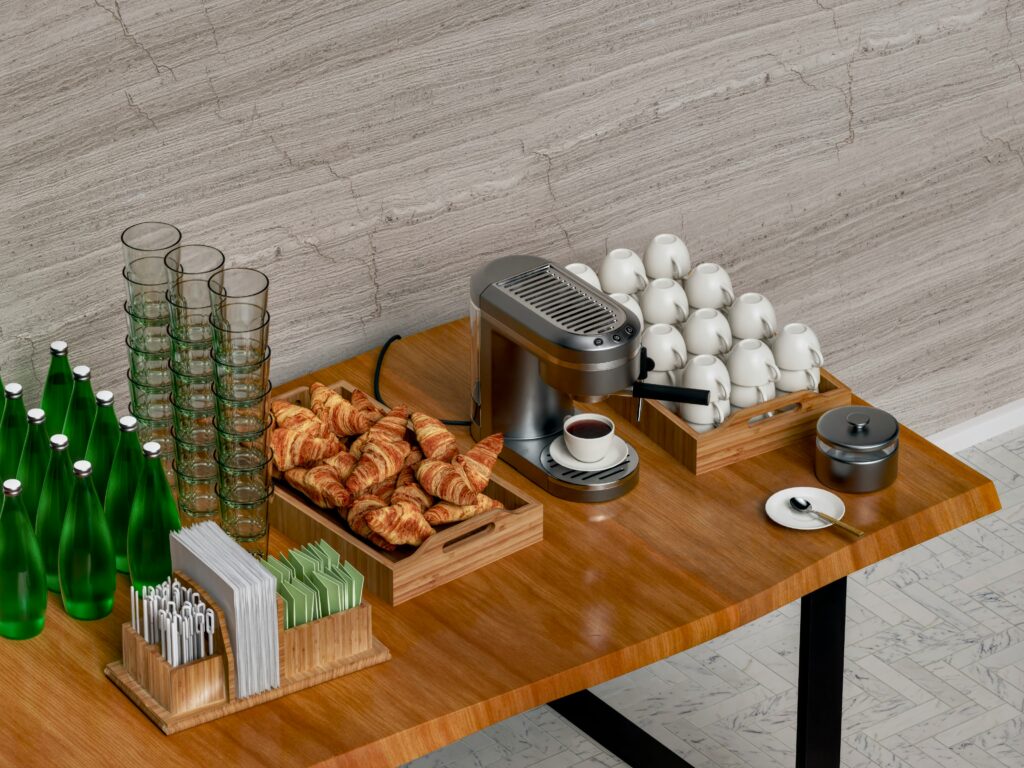
An office coffee service boosts productivity by keeping employees on-site, minimizing the time lost to off-site coffee runs, and creating a natural hub for spontaneous collaboration. Instead of just viewing it as an employee perk, it helps to look at an in-house coffee setup as a practical tool for workflow management and energy regulation.
When you provide a reliable, high-quality caffeine source within a few steps of a desk, you eliminate a major source of daily friction. People get the energy boost they need without breaking their concentration for extended periods.
Setting up the right system requires a bit of thoughtful planning. You have to consider machine types, foot traffic, and maintenance. Here is a practical breakdown of how a coffee service impacts daily productivity and how to set one up effectively.
Understanding the value of an office coffee setup starts with looking at the actual time employees spend leaving the building to buy a drink. It is a simple equation of time management.
Calculating Lost Time
When an employee leaves the office to visit a local cafe, the trip rarely takes less than fifteen minutes. They have to wait for the elevator, walk a block or two, wait in line, wait for the barista to make the drink, and walk back.
If you have a team of thirty people, and half of them leave for a coffee run just once a day, that is over three hours of collective lost time every single workday. Over a month, that turns into a significant drain on overall output. By moving the coffee source inside the building, you recover the vast majority of those hours.
Context Switching Penalties
The time lost to a coffee run is not just about the physical minutes spent away from the desk. It is also about the cognitive cost of context switching.
Once someone steps outside into the street, their brain completely disengages from the task they were working on. When they return to their desk with their drink, it can take another ten to fifteen minutes simply to get back into the mental flow of their work. Keeping the coffee walk to a short stroll down the hall minimizes this mental reset.
Keeping Employees On-Site Naturally
You cannot enforce productivity by demanding employees stay in their seats all day. People need breaks, and they will naturally seek out a change of scenery.
A good office coffee station works by offering an equal or better alternative to the local shop. If the quality of the coffee in the breakroom is high, employees will naturally choose the path of least resistance. You keep them in the building not by restricting them, but by out-competing the local cafe on convenience.
For businesses looking to enhance their workplace environment, exploring the benefits of an office coffee service can be a game changer. A related article that delves into the advantages of providing quality coffee in the workplace can be found here: Office Coffee Service Benefits. This resource outlines how a well-stocked coffee station can boost employee morale, increase productivity, and foster a collaborative atmosphere among team members.
Enhancing Focus and Cognitive Function
Coffee is functional. The primary reason it is a staple in work environments is its direct impact on alertness and concentration. Managing how and when your team accesses that focus enhancer plays a big role in the daily rhythm of the office.
The Science of Alertness
Caffeine works by blocking adenosine, a neurotransmitter that promotes sleep and relaxation. When adenosine receptors are blocked, alertness increases.
This mechanism is particularly highly effective for tasks that require sustained focus, data entry, or repetitive problem-solving. Having coffee easily accessible allows employees to self-regulate their own brain chemistry when they feel their attention starting to drift during complex tasks.
Managing the Afternoon Slump
Human circadian rhythms dictate a natural dip in energy levels for most people between 1:00 PM and 3:00 PM. This “afternoon slump” is a notorious killer of productivity.
During this window, physical output drops and mistakes tend to increase. An on-site coffee machine acts as a direct countermeasure. Because the coffee is just down the hall, employees can intercept this energy dip the moment they feel it, rather than waiting until they are entirely fatigued to do something about it.
The Importance of Decaf and Alternatives
More caffeine is not always better for productivity. Over-caffeination leads to jitters, anxiety, and a scattered inability to focus.
A well-rounded office service must include high-quality decaf coffee and herbal teas. Often, an employee just wants the routine of holding a warm mug to pace their thoughts while working through a problem. Offering non-caffeinated options allows them to maintain their workflow and break habits without wrecking their nervous system.
The Watercooler Effect in the Modern Office

In an era where many offices feature open floor plans and noise-canceling headphones, natural conversation has actually decreased. The coffee machine serves as an essential forced intersection for the team.
Spontaneous Collaboration Spaces
People generally stick to their own desks and their own immediate teams. A centralized drink station forces people from different corners of the room to share the same physical space.
When people wait around a machine for their cup to brew, small talk happens naturally. This idle time is incredibly valuable. It provides a low-pressure environment where people can decompress, which often leads to fresh perspectives when they return to their actual work.
Breaking Down Departmental Silos
It is very common for the sales team to barely know the IT team, or for marketing to never interact with accounting. These departmental silos slow down company-wide efficiency.
The office coffee station is neutral territory. When a developer bumps into a customer service rep at the espresso machine, they exchange information. These casual interactions build interpersonal rapport, which makes formal, cross-departmental requests much smoother and faster down the line.
Informal Problem Solving
Not every discussion requires a scheduled thirty-minute meeting and a calendar invite. A lot of minor roadblocks can be cleared up in two minutes in the breakroom.
You will often hear exchanges start with, “Hey, while I have you here…” at the coffee machine. These micro-meetings resolve small questions instantly. Creating a space that encourages these brief interactions saves hours of back-and-forth email chains.
Choosing the Right Setup for Your Team
The productivity benefits rely entirely on having a machine that actually works for your specific office. Buying the wrong equipment creates bottlenecks and frustration, which defeats the point entirely.
Bean-to-Cup vs. Pod Machines
Bean-to-cup machines grind fresh beans for every single cup. They generally provide the best quality and are surprisingly cost-effective at high volumes, as whole beans are cheaper than individual pods. However, they require a higher upfront investment.
Pod machines are incredibly simple and offer a wide variety of flavors, which is great to accommodate different tastes. The downside is that the cost per cup is significantly higher, and they generate a large amount of physical waste. For offices over twenty people, the cost of pods usually outweighs the convenience.
High-Volume Batch Brewers
If your office has predictable rush hours—like fifty people walking through the door at 8:30 AM—a specialized single-cup machine will create a massive line.
In this scenario, a commercial drip brewer, or batch brewer, is necessary. Having a large thermal carafe of plain, hot filter coffee ready to go allows people to grab a cup in three seconds and get to their desks. You can keep the espresso machine for the slower afternoon hours.
Accommodating Dietary Preferences
A modern coffee service is incomplete if it ignores the fact that many people no longer consume traditional dairy. If you only provide cow’s milk, a segment of your office will still walk to the cafe.
Maintaining a supply of oat milk and almond milk is standard practice now. Keeping a few basic syrups, like vanilla or caramel, also stops the team from craving the local coffee shop’s specialty drinks. The goal is to replicate the cafe menu as closely as practically possible.
If you’re looking to enhance your workplace environment, exploring the benefits of an office coffee service can be a great start. A related article discusses how providing quality coffee can boost employee morale and productivity. For more insights on this topic, you can read the full article here: office coffee service. Investing in a reliable coffee service not only satisfies caffeine cravings but also fosters a sense of community among coworkers.
Designing the Office Cafe Flow
| Metrics | 2019 | 2020 | 2021 |
|---|---|---|---|
| Number of employees served | 150 | 160 | 170 |
| Monthly coffee consumption (lbs) | 300 | 320 | 340 |
| Customer satisfaction rating | 4.5 | 4.7 | 4.8 |
Where you put the coffee service, and how you maintain it, dictates whether it works smoothly or becomes an annoying distraction. Layout and logistics matter just as much as the coffee itself.
Location and Traffic Flow
Coffee machines are inherently noisy. Grinders whine, milk frothers hiss, and people talk while they wait.
Because of this, you should never place the main coffee station directly adjacent to quiet work zones or dedicated focused-work desks. Locate the setup in a designated breakroom or a highly trafficked hallway. Make sure there is enough physical floor space in front of the machine so that a line of three or four people does not block normal foot traffic.
Factoring in Maintenance and Cleaning
A machine left uncleaned will break down, and a broken machine immediately halts the routine you built.
When choosing equipment, look closely at the daily cleaning requirements. Some bean-to-cup machines require a specific twenty-minute chemical flush at the end of every day. Make sure it is explicitly clear whose job it is to run these cleaning cycles. Plumbed-in machines—which connect directly to your water line—save a massive amount of time because nobody has to constantly refill a water reservoir.
Waste Management Logistics
If you use pods, you need dedicated bins for recycling. If you use whole beans, the machine’s internal discard bin will need to be emptied of wet grounds multiple times a day in a busy office.
Wet coffee grounds are heavy and can cause trash bags to leak. Consider setting up a simple compost bin for grounds if your building supports it. Keep cleaning supplies like microfiber cloths and surface spray right next to the machine so employees can easily wipe up their own spills.
If you’re considering enhancing your office coffee service, you might find it interesting to explore how technology is transforming workplace refreshments. A related article discusses the innovative features of smart coolers that can streamline beverage delivery and improve employee satisfaction. You can read more about these advancements in office refreshment solutions by visiting this link.
Managing Costs and Inventory
Getting good coffee into the office costs money, but it is a highly predictable expense once you establish a baseline. Proper inventory management ensures you never run out unexpectedly.
Tracking Consumption Needs
To set a budget, a safe estimate is that 70 percent of your employees will drink coffee, and they will average about two cups a day.
If you have a hybrid workforce where different cohorts are in the office on different days, tracking usage gets slightly trickier. Pay close attention to your consumption over the first month to establish your “par level”—the minimum amount of stock you need to survive a sudden busy week.
bulk Purchasing vs. Subscription Services
Buying wholesale bags of coffee from a big box store is the cheapest immediate option, but it requires an office manager to constantly monitor stock levels and run errands.
A subscription service managed by a local roaster or office supply company provides aggressive consistency. Many modern coffee services install internet-connected machines that automatically order more beans when internal counts run low. While you pay a slight premium for this, it removes an administrative task from your designated office manager’s plate.
The True ROI of the Service
Calculating the exact return on investment for coffee is not about tracking increased keystrokes or sales calls. It is about friction reduction.
Measure the cost per cup—usually between thirty cents and a dollar depending on your beans—against the hourly wage of the employees. If an employee making thirty dollars an hour saves twenty minutes a day by staying in the building, the cost of the coffee pays for itself immediately. It is a baseline organizational tool that keeps the physical workspace running smoothly.